
Visualizing Indigenous DRI Solutions
A CDRI Photography Contest on Indigenous Practices and Traditional Knowledge for Disaster Resilient Infrastructure
The Idea
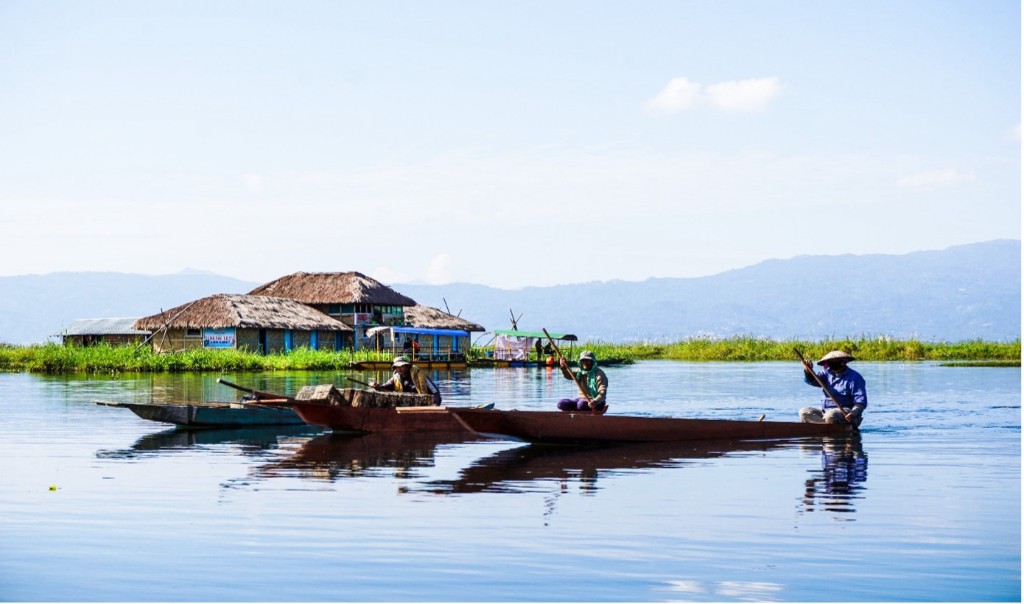
A round mud house in the Kutch desert outlasts the reinforced-concrete building next door when the ground starts shaking. A bridge made of tree roots carries a village across a river in flood. Stepwells have been used for centuries to store water for a community during the dry season. A few decades ago, stilt houses were the predominant form of building in Southeast Asia due to the tropical climate. In addition to providing flood protection, the elevated layout provided shade and natural ventilation. Considering the community's fundamental necessities, these traditional homes were constructed in accordance with the local climate, topography, and culture. These are not quaint techniques, but the infrastructure systems built by people in response to the natural hazards (floods, earthquakes, cyclones, and droughts, etc.) that occurred season after season. That is what disaster risk reduction looked like before anyone had a term for it. That was the beginning of resilient infrastructure through Nature-based Solutions (NbS).
Communities read their own weather and geology, tried things, kept what held, and handed it down. Over many generations, they improved these practices until they became successful. These traditional practices were low-cost, locally sourced, environmentally regenerative, assessed in field against the one (or several) hazard that threatened the place or the community. These functional systems that make up disaster resilient infrastructure, have been developed through centuries of observation and are still in place today. For example, indigenous Australians have practised cultural burning for thousands of years which involves lighting small, controlled fires to clear vegetation so that there is never enough fuel for a major bushfire. To forecast where wildfires are most likely to start, satellite imagery is now combined with the traditional knowledge of reading a landscape through a plant's colour and scent or the shade of trees.
CDRI invites photographers to capture indigenous and traditional practices that have made communities resilient to natural hazards and to share the story of their resilience characteristics and impact. A qualifying subject is any traditional or indigenous practice, structure, or system that helps a community withstand, absorb, or recover from a natural hazard. It may be something built, or something ecological, but is physical.
Why CDRI is running this contest?
Across the Coalition's programmes, from mountain regions to small island developing states, one theme recurs: traditional and indigenous knowledge. CDRI's Global Infrastructure Resilience reports show that disaster-related losses run into the hundreds of billions of dollars a year, and the indirect losses from disrupted services routinely exceed the cost of the physical damage itself while highlighting the nature-based and traditional solutions that complement, substitute, or safeguard conventional “grey” infrastructure.
Building resilience is no longer optional, it is one of the highest-return investments a community can make, and traditional indigenous knowledge is a proven tool for reducing risk at low cost. This context helps to bring those indigenous knowledge and practices into view, document them, and bring them into mainstream discourse of promoting disaster resilient infrastructure.
What are we looking for?
- One original photograph that clearly captures indigenous or traditional practice, structure or system ideally showing its resilient function in relation to the hazard.
- A brief description in English (up to ~250 words) of the photograph. This written account will be judged alongside the image and carries significant weightage. In addition to the geographic location, it must address:
- Why is it resilient? Which hazard does the practice withstand, and how does it work?
- What is unique about it? What makes the technique distinctive or ingenious — the design, material, or inherited skill?
- What is tangible about it? The physical reality — the materials, engineering and maintenance you can see and touch.
- The picture should demonstrate how the practice can withstand a risk/ assist a community in recovering from setbacks; both the image and the text should highlight the risk.
- Themes to inspire (subject need not be limited to these but must relate to physical infrastructure):
- Water infrastructure: traditional water harvesting, stepwells, terraces, irrigation systems, tanks, flood-spreading and ‘room for the river’ practices
- Roads & mobility: living root bridges, rope & bamboo bridges, cantilever bridges, causeways and paths designed to survive monsoon and flood.
- Housing & shelter: earthquake-resilient homes, stilt housing, passive-cooling wind towers, local materials and joinery, wind- and heat-adapted design
- Community infrastructure & livelihoods: grain stores, embankments, sacred groves and protective forests, terraced agriculture
- Resilience infrastructure: bunds, breakwaters, mangroves, slope stabilisation, and other traditional defences against specific local threats.
Who can enter?
- Open to all individuals and institutions* globally including CDRI Member Countries
- Entry is completely free [no submission fee]
- Only one entry per person is permitted.
* Colleagues and consultants of the CDRI Secretariat are encouraged to take part in the photo contest. While they are not eligible for prizes, their contributions may be recognized through a Jury Commendation.
Specifications of entries
- All entries must originate as a single, authentic photograph taken by the participant using an optical camera (DSLR/ mirrorless/ compact/ smartphones or tablets).
- Each entry must include the location and date of the photograph, along with the name of the photographer who took it, and a description in under 250 words.
- Photographs must have been taken within two years of the date of entry.
- Entries submitted must be up to 5 MB with minimum of 2048 pixels or maximum of 3000 pixels on the longest side, sRGB in JPEG format. It should include EXIF/Metadata.
- AI-generated images (e.g., Midjourney, DALL-E, Adobe Firefly, etc.) are strictly not permitted; all entries must be original photographs taken by the participant.
- Basic global edits are allowed. This includes minor adjustments to colour balance, contrast, exposure, sharpness, and cropping.
- You may not add, move, replace, or remove pixels. Digital manipulation, composite imagery, sky replacements, and generative fill are strictly prohibited.
- Shortlisted finalists must be able to provide the original, unedited RAW file or untampered camera JPEG upon request for verification.
- By entering, participants grant CDRI the right to use, display, and reproduce submitted photographs and descriptions for non-commercial, educational, and advocacy purposes connected to disaster resilient infrastructure, with full credit to the photographer.
Jury Evaluation
A jury of eminent photographers, disaster-resilience experts and specialists in indigenous knowledge will review all submissions against the following criteria:
- Depiction of resilience: how clearly the image conveys the practice's protective function against a real hazard.
- Authenticity: the practice is genuinely traditional/indigenous and accurately represented.
- Relevance today: why this practice matters now, amid increasing climate and disaster risk.
- Strength of the written account: clarity, insight and tangible detail in the description.
- Photographic quality: composition, light and storytelling.
Prizes and recognition
- First prize: In kind contribution up to $1000 for a recognized course or subscription
- Second prize: In kind contribution up to $600 for a recognized course or subscription
- Third prize: In kind contribution up to $400 for a recognized course or subscription
- 10 number of Jury Commendations
Beyond the prize money, winning and commended entries will be exhibited and published by CDRI across its website, social channels, events, and knowledge products before a global audience of governments, member countries and resilience experts.
CDRI reserves the right to modify the contest prizes and its rules and regulations as and when necessary, without prior notice.
To participate in the contest, the participant must own the rights of the content being submitted.
Participants retain ownership of the copyright and all other intellectual property rights in their submitted photograph(s). By participating in the Contest, participants grant CDRI a perpetual, worldwide, royalty-free, non-exclusive and transferable licence to use, reproduce, publish, display, distribute, communicate, and adapt the submitted photographs. The photographer shall be credited where reasonably practicable.
How to enter?
- Submit: Submission through portal CDRI-Projects
- Announcement: 09 August 2026
- Deadline: The competition closes at 23:59 IST (i.e.18:29 GMT) on 09 October 2026
- Winners’ announcement: not earlier than 2 November 2026